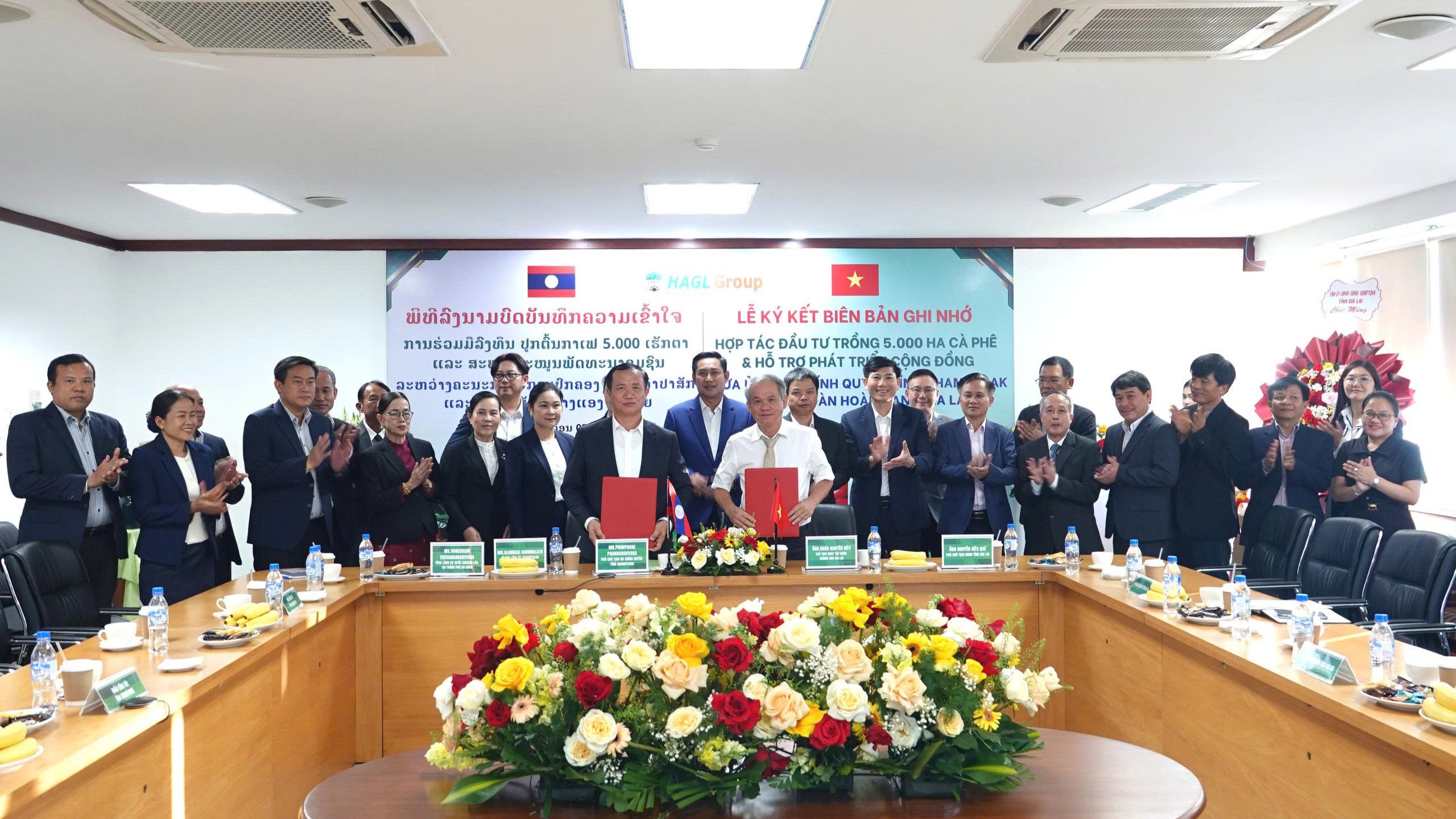
Hoang Anh Gia Lai Coffee Ecosystem

Hoang Anh Gia Lai is developing its coffee operations through an industrial-scale agricultural model, beginning with large-scale cultivation areas and expanding into advanced primary processing, central processing, refining, and circular recycling.

HAGL aims to build a coffee ecosystem characterized by consistent quality, large-scale supply capacity, and sustainable growth.

Value chain integration - Consistent quality - Circular agriculture
DEVELOPMENT VISION

HAGL is positioning coffee as one of the Group's core pillars, leveraging the competitive advantages of large-scale raw material zones, industrial production capabilities, and an advanced deep-processing system.

Rather than merely stopping at cultivation and raw material trade, HAGL advances an integrated model spanning cultivation, primary processing, processing, refining, and circular recycling, with every stage standardized to elevate quality, optimize costs, and strengthen supply capacity for both domestic and international markets.  

Expanding large-scale coffee sourcing areas.

Industrializing post-harvest and processing operations.

Establishing a circular model for coffee byproducts.

Value Chain Model: Cultivation – Primary Processing – Processing – Refining – Recycling

HAGL’s coffee model is built on a decentralized-centralized operational principle: rapid on-site primary processing at growing regions, followed by centralized standardization, deep processing, and circular recycling at suitable processing centers. This structure ensures quality control, mitigates seasonal risks, optimizes logistics, and enhances overall supply chain efficiency. 

1
Cultivation

HAGL develops its coffee-growing regions toward large-scale, sustainable, and responsible coffee cultivation. Our focus is on standardizing farming practices, strictly managing input quality, maintaining rigorous harvesting protocols, and aligning growing-area standards with post-harvest processing requirements.

2
Primary processing

Decentralized primary processing plants are strategically placed close to cultivation areas for immediate post-harvest handling, minimizing quality loss and ensuring a consistent semi-finished supply for central processing hubs.

3
Central processing

The central processing facility is tasked with grading, standardization, storage, quality control, and product preparation tailored to the specifications of domestic and international B2B contracts.

4
Refining

HAGL is strategically expanding into deep-processed products, including instant coffee, liquid extracts, B2B/OEM offerings, and other value-added products, to move up the value chain and reduce exposure to raw commodity price volatility.

5
Recycling

Byproducts, coffee grounds, ash, and sludge from processing are systematically collected, treated, and repurposed into specialized organic fertilizers, closing the circular loop "from the coffee tree back to the coffee tree.”

Raw material zones – The foundation of HAGL coffee ecosystem

HAGL is developing coffee raw material zones in regions with favorable climate, soil conditions, and sufficient scale for industrialized agriculture. Serving as the primary foundation of the entire ecosystem, the raw material zone determines input quality, stable yield, and the operational viability of post-harvest processing plants. HAGL focuses on expanding cultivation area, standardizing farming practices, establishing plantation data systems, and preparing primary and secondary processing infrastructure aligned with projected production volumes.

Facility ecosystem

This system comprises decentralized primary processing plants, drying centers, high-quality processing plants, refining plants, and by-product recycling plants. The objective of this facility network is to transform raw material advantages into industrial manufacturing capabilities with consistent quality, transparent traceability, high volume, and the capacity to fulfill domestic and international contracts.

Hạt cà phê Robusta

Decentralized primary processing plants

Primary processing, washing, and grading freshly harvested cherries immediately after harvest to preserve natural sugar levels and prevent defective fermentation.

Drying and crop monitoring center

Applying modern rotary drum drying technology to optimize export-standard moisture content and regulate seasonal volume.

Hạt cà phê Robusta

High-quality processing plant

Processing premium Arabica and Robusta lines (Honey, Natural, Fully Wet) to achieve high cupping scores.

Refining plant

Producing authentic roasted ground coffee and freeze-dried instant coffee extract to preserve the full natural flavor.

Circular recycling plant

Utilizing coffee pulp to produce Cascara tea, and spent coffee grounds for bio-organic fertilizers and clean biomass pellets.

SUSTAINABILITY & CIRCULAR BY-PRODUCTS


Sustainable development is not merely a communication message, but an operational model.

Through a circular model, byproducts generated from coffee primary processing and refining are systematically collected, processed, and recycled into organic-mineral nutrients returned directly to coffee growing zones. This is how HAGL aims to reduce waste, lower input costs, and enhance the sustainability of the entire value chain.

PRODUCTS AND MARKETS

PRODUCTS AND MARKETS

HAGL is developing a multi-tiered product portfolio: premium green coffee beans, B2B roasted coffee, instant coffee, refined extracts, and circular products derived from byproducts. In the initial phase, HAGL prioritizes establishing robust B2B supply capabilities for domestic and international partners. Once the processing facility network is fully operational, the Group will progressively expand into deep-processed product lines, OEM services, and high-value-added offerings.

Return to top of page